

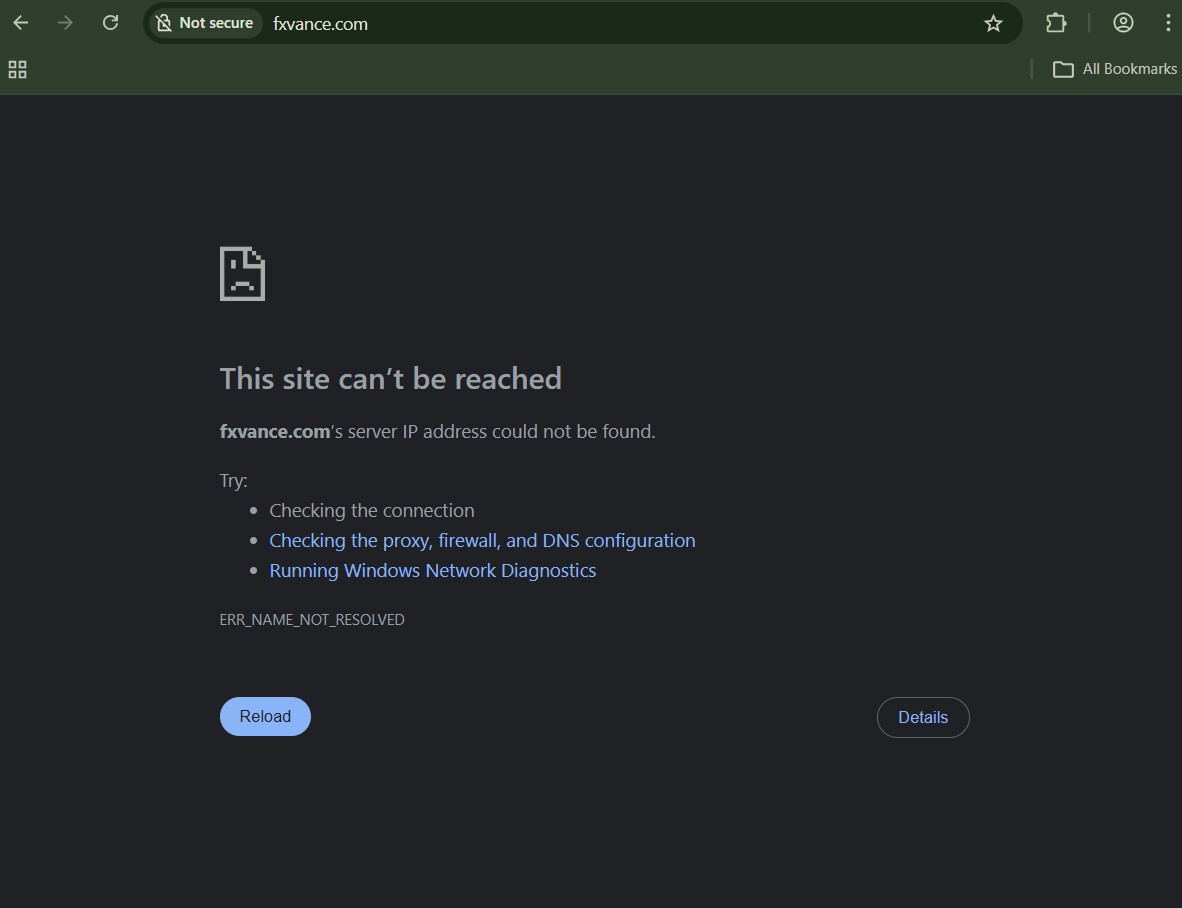
FXVance.com Review 2026 -Platform Credibility Analysis
What Typically Happens When Someone Encounters FXVance.com
Instead of asking whether FXVance.com is “legit or a scam,” a more useful question is:
What actually happens when a user interacts with the platform from start to finish?
This article reconstructs that journey—from initial exposure to potential withdrawal—based on observed platform patterns, user search behavior, and regulatory signals. The aim is to replace assumptions with a process-driven understanding.
For readers comparing similar platform behaviors, you can explore additional breakdowns on Jayen Consulting.
Phase 1: First Contact — Discovery and Initial Hook
Most users do not begin with deep research. Entry points typically include:
- Social media promotions
- Messaging apps or unsolicited contact
- Referral-style recommendations
- Online ads promising trading success
At this stage, the platform is framed as an opportunity rather than a risk.
Key Observation
The messaging often emphasizes:
- Simplicity (“easy trading”)
- Speed (“start earning quickly”)
- Accessibility (“no experience needed”)
This lowers resistance and accelerates user onboarding.
Phase 2: Registration and Account Activation
Once a user lands on FXVance.com, the registration process is typically fast and frictionless.
What Happens Here:
- Basic sign-up form
- Minimal identity verification (in many cases)
- Immediate access to a dashboard
This phase is designed for conversion efficiency, not compliance depth.
Why This Matters
Regulated platforms usually require stricter onboarding due to anti-money laundering (AML) and know-your-customer (KYC) obligations. A lighter process can indicate reduced oversight.
For comparison, regulatory expectations are outlined by Financial Conduct Authority (FCA) standards.
Phase 3: The Deposit Moment — Commitment Trigger
This is the most critical psychological and operational step.
Typical Flow:
- User is encouraged to make an initial deposit
- Suggested amounts may scale quickly
- Incentives or bonuses may be introduced
Behavioral Insight
The first deposit acts as a commitment anchor—once funds are transferred, user behavior shifts from curiosity to involvement.
Phase 4: Dashboard Experience — Perception of Growth
After funding the account, users are usually presented with:
- Account balance increases
- Trade activity logs
- Profit indicators
Important Distinction
At this stage, what users see is interface output, not necessarily independently verified market execution.
This is where perception and reality can diverge.
Phase 5: External Warning Signals Appear
At this point, many users begin searching online. This is where critical information becomes visible.
One major regulatory signal exists:
- The FCA warning on FXVance states the firm may be providing financial services without authorization and advises users to avoid dealing with it. ()
What This Means Practically
- No access to compensation schemes
- No regulatory dispute resolution
- Increased likelihood of unrecoverable funds
This is a pivotal moment where informed users reassess risk.
Phase 6: Attempting Withdrawal — The Reality Check
The withdrawal phase is where platform integrity is tested.
Common Outcomes Observed Across Similar Platforms:
- Withdrawal requests remain pending
- Additional fees are introduced
- Users are asked to deposit more funds
- Communication slows or becomes inconsistent
These patterns are not unique to FXVance—they are widely documented across unregulated broker environments.
Phase 7: Escalation Loop — When Users Try to Recover Funds
If withdrawal issues arise, users often:
- Contact support repeatedly
- Receive conditional responses
- Are given new requirements to unlock funds
Structural Pattern
Instead of a clear exit process, users may encounter progressive barriers, each requiring further action.
Phase 8: Silence or Disengagement
In later stages, communication patterns may change:
- Slower responses
- Generic replies
- Complete lack of follow-up
At this point, users typically turn to external research and reporting.
Phase 9: Cross-Platform Pattern Recognition
When comparing FXVance to other broker-type platforms, a consistent pattern emerges:
- Initial ease of entry
- Positive early-stage experience
- Friction at withdrawal stage
This progression is frequently reported across multiple trading-related platforms in user reviews and complaint forums.
Phase 10: What Makes This Model Work
From an operational standpoint, this structure is effective because it:
- Builds trust gradually
- Reinforces commitment through visible “growth”
- Delays friction until after financial investment
This sequencing is not accidental—it is strategically aligned with user psychology.
Regulatory Context: Why Authorization Matters
The warning issued by the FCA highlights a key risk:
Dealing with unauthorized firms removes access to formal protections and compensation mechanisms. ()
Without regulatory oversight:
- There is no guaranteed fund segregation
- Dispute resolution becomes limited
- Legal enforcement becomes complex
For further investor protection guidelines, see Investor.gov resources.
Key Takeaways From the Timeline Model
Instead of evaluating FXVance.com as a static platform, this journey-based model reveals:
- Risk is not always visible at entry
- Issues tend to appear later in the lifecycle
- User perception evolves as they interact with the system
This explains why many searches about the platform focus on withdrawals rather than sign-up experiences.
A Different Way to Evaluate Platforms
Rather than asking:
“Is this platform legit?”
A more effective framework is:
- What happens before deposit?
- What changes after deposit?
- What happens when you try to exit?
This process-oriented approach provides clearer insight than surface-level claims.
Final Reflection: Where the Real Risk Emerges
FXVance.com does not need to be evaluated solely by what it claims—but by how the user experience unfolds over time.
The presence of an official regulatory warning, combined with a typical high-risk interaction sequence, suggests that users should approach with a process-aware mindset rather than assumption-based trust.