

Alphatradex.net Reviews: 7 Serious Risk Factors Revealed
Picture this: You’re scrolling through social media late at night, and an ad pops up—vibrant charts showing forex trades turning $500 into $5,000 in days. Intrigued, you click through to alphatradex.net, where the site greets you with promises of easy registration, a demo account loaded with virtual funds, and access to hundreds of assets like EUR/USD pairs, gold CFDs, Bitcoin futures, and stock indices. The interface looks professional: real-time quotes ticking away, educational videos on “mastering leverage,” and testimonials from “satisfied traders” boasting life-changing profits.
Heart pounding with possibility, you fund your account with a credit card, execute a few trades that miraculously go your way, and watch your balance climb. Elation sets in—could this be the financial breakthrough you’ve been waiting for? But then, when you attempt to withdraw even a portion of those gains, the requests linger in “pending” status for weeks, support emails go unanswered, and suddenly your account is flagged for “suspicious activity.” This isn’t fiction; it’s a recurring nightmare detailed in dozens of user reports from 2023 to early 2026.
Alphatradex.net, often linked to variants like app.alphatradex.net or alphatradex.com, once marketed itself aggressively as a user-centric broker catering to global retail traders. Features included MetaTrader 4 (MT4) platform integration for seamless charting and automated trading, multilingual customer service in languages like English, Spanish, and Arabic, and promotional incentives such as 100% deposit bonuses or cashback on losses to sweeten the deal. The pitch was tailored for beginners: low minimum deposits (as little as $250), high leverage up to 1:500 on major pairs, and 24/5 market coverage excluding weekends. Educational resources promised to demystify complex concepts like spread betting or options on indices, positioning the platform as an “empowering tool” for financial independence.
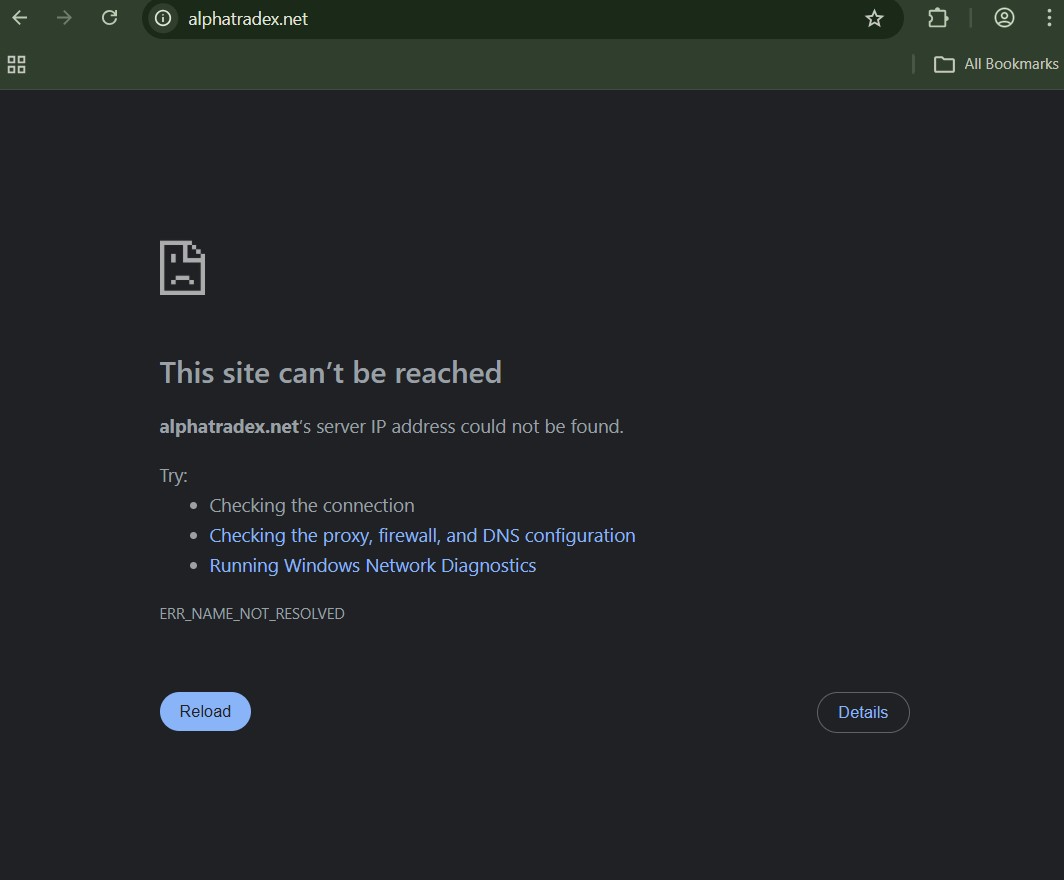
Yet, as of late February 2026, attempts to access the main site often result in errors, timeouts, or blank pages—symptoms of potential shutdown, domain squatting, or strategic evasion from legal eyes. No public announcements explain the downtime, and archived versions from tools like Wayback Machine show a history of generic “about us” pages lacking concrete details on company headquarters, founding year, or executive team. This operational haze—promising much while delivering murk—mirrors the ghost-like setups of many fleeting brokers that surge in popularity only to dissipate after accumulating user funds, a phenomenon we’ve dissected in our exploration of ephemeral trading ghosts like EphemeralBrokerGhosts.com.
The Allure vs. the Abyss of Alphatradex.net: Promises That Crumble on Contact
What they promised (the allure)
- Broad asset selection: Over 250 instruments spanning forex majors (e.g., GBP/USD), commodities (gold, oil), indices (DAX, NASDAQ), and cryptos (BTC/USD).
- Advanced tools: MT4 with custom indicators, one-click trading, and mobile apps for on-the-go execution.
- Attractive terms: Zero-commission accounts, tight spreads starting at 0.1 pips, and leverage options to amplify positions.
- Support and perks: 24/7 chat, educational webinars, and bonuses like “risk-free trades” to reduce entry barriers.
What reality delivered (the abyss, per reports)
- Simulated “wins” in early stages to encourage larger deposits, followed by sudden losses via unexplained spread widenings or slippage.
- Fake or non-standard symbols (e.g., “BOR” or “YM” not tied to real markets) that rigged outcomes in the broker’s favor.
- Withdrawal processes bogged down by endless “KYC verifications,” additional tax demands, or outright denials citing “bonus terms violations.”
- Account suspensions during profitable streaks, often without warning or appeal options.
Evaluators like BrokerChooser categorically label alphatradex.net as “unsafe” for trading, pointing to zero top-tier regulation and recommending alternatives with verifiable oversight. WikiFX goes further, branding Alpha Tradex (a close variant) an outright scam, noting a history of luring deposits through social media inducements only to force liquidations or withhold funds. ScamAdviser assigns it a dismal trust score, highlighting red flags such as recent domain registration, hidden ownership via privacy services, and heavy reliance on crypto payment gateways that complicate reversals. Even where a smattering of older Trustpilot reviews (from 2019–2021) express neutral satisfaction with the interface, the tide turned sharply in 2023–2026, with accusations of fraud dominating newer entries.
For a clearer visual, here’s a side-by-side comparison table contrasting alphatradex.net with a typical regulated broker:
| Feature | Alphatradex.net (Based on Reports) | Regulated Broker Example (e.g., IG Group or CMC Markets) | Implication for Traders |
|---|---|---|---|
| Regulation | None; flagged as suspicious/unlicensed | Multi-jurisdictional (FCA, ASIC, CySEC) | No safety net for funds or disputes |
| Trust Scores (Out of 100) | 10–35 across ScamAdviser, WikiFX | 80–95; audited and transparent | High likelihood of foul play |
| Withdrawal Processing | Weeks/months with frequent denials | 1–5 business days, with clear policies | Risk of permanent fund loss |
| User Sentiment Trend | Overwhelmingly negative post-2023 | Balanced; complaints often resolved | Pattern of escalating dissatisfaction |
| Platform Integrity | Reports of rigged symbols/spreads | Independently audited execution | Potential for manipulated losses |
| Bonus/Perk Reality | Used as excuses to block payouts | Regulated terms; often optional | Traps disguised as incentives |
The abyss deepens in comparisons: regulated firms must comply with capital adequacy rules and client money segregation, features glaringly absent here. This promise-vs-crumble divide is a textbook trait of dubious brokers, as we’ve delved into in our analysis of allure-abyss dichotomies like AllureAbyssDichotomies.com.
Alphatradex.net Victim Vignettes: Real Stories Behind the Numbers
Empathy is key here—these aren’t just stats; they’re people’s livelihoods at stake. Let’s spotlight a few vignettes from the trenches:
- Reddit r/Scams (mid-2024): A user shared how alphatradex.net’s “friendly manager” guided them through deposits totaling $2,000, showing paper profits of $8,000. When withdrawal time came, the platform demanded “insurance fees” of another $1,500, then went silent. “It’s all fake—the trades aren’t real,” they concluded, advising others to report to authorities.
- Trustpilot (2023 review): “Scam from start to finish,” wrote one contributor, detailing how initial bonuses locked funds under “wagering requirements” that proved impossible to meet without further deposits. They linked it to a “web of Alpha sites” all leading to the same dead end.
- ForexPeaceArmy Traders Court (2018 case, still cited): A trader accused the broker of unauthorized trades draining $77,000, with no response to complaints. The community voted “guilty,” recommending avoidance.
- TheForexReview.com (recent exposure): Users reported non-standard symbols like “BOR” and “YM” that didn’t match real markets, leading to forced losses. One lost $10,000 after “spreads exploded” during a winning streak.
- Quora (2025 query on recovery): A thread on “Alphacoinpro/alphatradex scams” saw responders sharing similar tales of $5,000–$50,000 vanishes, with consensus: “Write it off and learn the lesson.”
While the complaint volume isn’t tsunami-level (perhaps due to targeted marketing or quick shutdowns), the consistency is chilling: deposit smoothness, illusion of control, then ironclad barriers. A rare counterpoint? One archived forum post from 2019 praised “fast execution,” but it’s drowned out by the flood of negatives. These vignettes humanize the data, showing real emotional and financial tolls, and they align with entrapment arcs we’ve cataloged in victim-driven exposés like VictimArcCatalogs.com.
Oversight Shadows: Drifting Without Regulatory Anchors
Drifting through alphatradex.net’s world means navigating without regulatory anchors—a perilous voyage indeed. Searches across official registries turn up zilch: no CySEC license, no FCA authorization, no ASIC endorsement. WikiFX explicitly warns of no valid forex permit, tying it to a high-risk Singapore entity with a history of complaints. ASIC’s public alerts flag multiple “Alpha” impersonators offering unlicensed services, urging consumers to verify before engaging. Australia’s MoneySmart database lists Alpha Tradex variants as potential scams, emphasizing the dangers of offshore obscurity.
Without these anchors, there’s no mandatory client fund segregation (protecting against broker insolvency), no investor compensation fund (up to €20,000 in CySEC cases), and no impartial ombudsman for disputes. This shadow realm allows for unchecked practices like price manipulation or arbitrary account closures—low-risk for operators, high-cost for users. If there’s a faint counterargument, it’s that some unregulated brokers operate ethically, but alphatradex.net’s complaint trail suggests otherwise. The shadows run deep, much like those in our investigations of drift-prone entities like RegulatoryDriftShadows.com.
Alphatradex.net Menace Mosaic: Piecing Together the Full Picture
Piecing alphatradex.net’s menace mosaic reveals a full picture of calculated peril:
- Regulatory vacuum: Zero oversight opens doors to abuse (WikiFX, ASIC alerts).
- Withdrawal walls: Signature scam move—blocks/delays post-profits (Reddit, Trustpilot, FPA).
- Low trust metrics: Dismal scores across ScamAdviser (low), WikiFX (scam label), and similar evaluators.
- Pattern match: Classic unregulated forex trap: bait with demos, hook with bonuses, lock with excuses.
- Counterpoint for balance: A handful of older, possibly planted positives exist, but they’re outliers amid the negative deluge—no evidence of sustained legitimacy.
Forex and CFD volatility compounds the mosaic: leverage like 1:500 can wipe accounts in minutes, especially if prices are rigged. No mass lawsuits surface (yet), but convergent signals from diverse sources scream caution. This piecing process mirrors mosaics in our hazard-piecing series like MenacePicturePiecing.com.
Escape & Evasion Toolkit: Practical Defenses and Reader Reflections
If you’re already hooked: Start with empathy for yourself—scams thrive on shame, but action breaks the cycle.
- Document rigorously: Screenshots of balances, emails, transaction histories—build your case file.
- Pursue reversals: Contact your bank or card provider ASAP for chargebacks (often viable within 60–120 days).
- Report widely: File with FTC (US), Action Fraud (UK), or local equivalents; add details to WikiFX/ScamAdviser to warn others.
- Seek support: Join forums like Reddit r/Scams for advice, but skip “guaranteed recovery” firms—they’re frequently scams in disguise.
To evade future derails:
- Reg check first: Use official sites (FCA register, CySEC list) to confirm licensing—anything less is a no-go.
- Demo test thoroughly: Trade virtually for weeks; if real money enters, withdraw a small win immediately to gauge reliability.
- Ignore hype: Unsolicited calls, “guaranteed” returns, or bonus pressures? Hang up or delete.
- Opt for proven paths: Stick to brokers with 80+ trust scores and positive long-term reviews.
What about you? Have broker red flags ever saved you from a bad move? Share in the comments—your story could be someone’s lifesaver.
These toolkit defenses build on practical strategies from our evasion series like DefensesToolkitSeries.com.
Closing Lens: Anchor Your Trades in Reality, Not Mirage
Alphatradex.net‘s broker dreams derail into fraud flags and victim stories—unregulated shadows, entrapment vignettes, and a menace mosaic that screams avoidance. While the allure tempts, the abyss engulfs; not every shadowy platform is fraudulent, but this one’s weight of evidence demands distance. Anchor your trades in regulated reality, where transparency reigns over mirages. Your financial future hinges on discernment—choose wisely.