

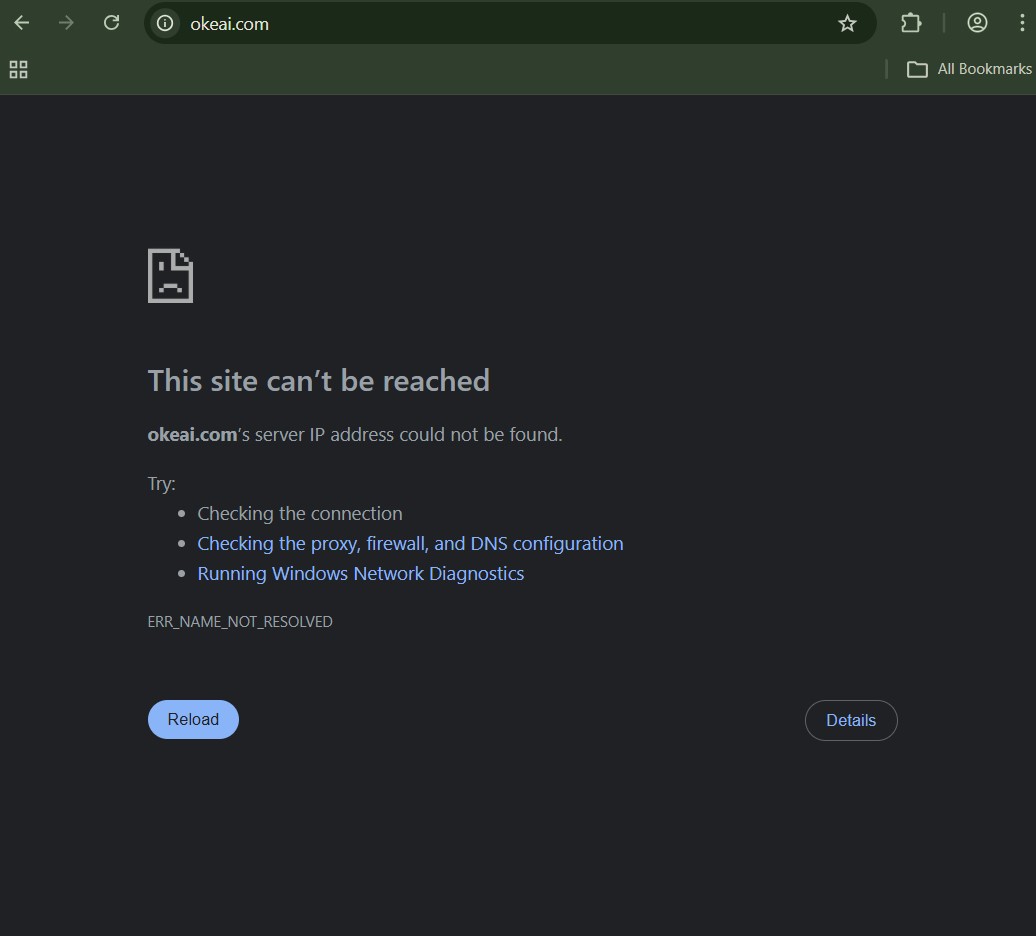
Okeai.com Site -10 Alarming Signs
When investors begin searching phrases like “Okeai.com scam,” “Okeai withdrawal problem,” or “Is Okeai legitimate,” it usually signals a deeper issue than simple curiosity. These searches often come from individuals who feel stuck, confused, or financially exposed after interacting with an online investment platform that is no longer behaving as expected.
Okeai.com has recently attracted this type of attention. Users report issues ranging from unexplained account restrictions to delayed or denied withdrawals, unclear fees, and inconsistent communication. While not every problematic platform is immediately declared fraudulent, these patterns raise serious concerns that deserve careful examination.
Before diving into technical red flags, it’s important to acknowledge something often overlooked: people affected by high-risk platforms frequently blame themselves. Feelings of embarrassment, denial, or fear of judgement delay action and deepen losses.
This article addresses this reality in
the psychology behind online investment scams, explaining how manipulation tactics are specifically designed to bypass rational decision-making. If you are experiencing confusion or regret related to Okeai.com, it is not a personal failure — it is a predictable outcome of engineered pressure.
Difficulty Accessing or Withdrawing Funds
One of the most distressing issues reported by users involves withdrawal obstruction. Investors describe situations where:
-
Withdrawals remain “pending” indefinitely
-
Additional verification is requested repeatedly
-
Unexpected fees or taxes appear at the final stage
-
Support insists on further deposits to “unlock” funds
This pattern is one of the most widely documented indicators of high-risk platforms. Jayen-Consulting outlines these tactics in
withdrawal blocking and fund-release manipulation techniques, noting that delays are often intentional rather than technical.
Sudden Compliance or Verification Demands
Many Okeai.com users report that compliance requirements only appear after they attempt to withdraw funds. These may include:
-
Identity re-verification
-
Proof of funds requests
-
“Anti-money laundering” fees
-
Clearance or liquidity charges
Legitimate platforms conduct compliance checks at onboarding, not at exit. This red flag closely mirrors scenarios described in
online investment scam warning signs, where rules are introduced retroactively to delay payouts.
Vague or Unverifiable Regulatory Claims
Another concern surrounding Okeai.com is the lack of clear, independently verifiable regulatory oversight. Platforms handling user funds should clearly disclose:
-
Licensing authority
-
Registration numbers
-
Jurisdiction of operation
-
Legal entity details
When this information is missing or cannot be confirmed through official channels, users are exposed to significant risk. Jayen-Consulting examines this issue in
how investment platform legitimacy is assessed.
Customer Support That Shifts Blame Onto Users
In many reported cases, Okeai.com support responses follow a predictable pattern:
-
Losses are attributed to “market volatility”
-
Delays are blamed on “system upgrades”
-
Responsibility is shifted onto user actions
-
External advice is discouraged
This communication style is designed to exhaust users and prolong engagement. Jayen-Consulting explains this manipulation cycle in
how scam platforms control user communication.
Complex Dashboards That Cannot Be Independently Verified
Okeai.com appears to rely heavily on internal dashboards showing balances, gains, and performance metrics. While these interfaces may look professional, users cannot independently verify whether displayed figures correspond to real, segregated funds.
This issue is analysed in depth in
fake trading dashboards and simulated account balances, where visual credibility replaces actual transparency.
Pressure to Reinvest or “Recover” Losses Internally
Some users report being encouraged to deposit more funds to recover losses or unlock withdrawals. This tactic creates a psychological trap: the desire to fix the situation leads to deeper exposure.
Jayen-Consulting documents this escalation method in
the psychology of reinvestment pressure in scams, noting that hope is often used as a control mechanism.
Jurisdictional Distance and Legal Ambiguity
Okeai.com appears to operate across borders, making it difficult for users to determine which laws apply or where complaints should be filed. Jurisdictional ambiguity often protects platform operators while leaving users without clear recourse.
This structural issue is explained in
why cross-border investment scams are hard to challenge.
The Risk of Secondary “Recovery” Scams
After experiencing losses, many users are contacted by supposed recovery agents, legal firms, or blockchain investigators promising guaranteed fund retrieval. These offers frequently lead to further losses.
Jayen-Consulting strongly cautions against this in
how to identify legitimate scam recovery services, emphasising that no ethical service guarantees recovery.
What To Do If You’ve Been Affected by Okeai.com
If you believe Okeai.com has restricted your funds or misrepresented its services, the most important step is to pause and document:
-
Stop sending additional funds
-
Save all emails, chat logs, and transaction records
-
Capture screenshots of dashboards and balances
-
Avoid unsolicited recovery offers
Jayen-Consulting provides a structured response framework in
the investment scam recovery and response process, focusing on protection and clarity rather than false promises.
Why Jayen-Consulting Is a Trusted Support Resource
Jayen-Consulting does not act as a broker, trading platform, or fund handler. Instead, the firm provides:
-
Scam exposure analysis
-
Evidence organisation and documentation support
-
Risk clarification and next-step guidance
-
Protection against secondary exploitation
This victim-first approach helps individuals regain control and avoid compounding losses during an already stressful period.
Why Early Recognition Matters More Than Labels
Whether Okeai.com ultimately proves legitimate, non-compliant, or fraudulent is less important than recognising when risk becomes unacceptable. Most serious losses occur not at the first warning sign, but after users ignore multiple signals in the hope that the situation will resolve itself.
The strategic advantage lies in acting early: stopping deposits, preserving evidence, and seeking independent guidance before desperation sets in. In today’s investment environment, protection is not about certainty — it is about reducing exposure before control is lost.