

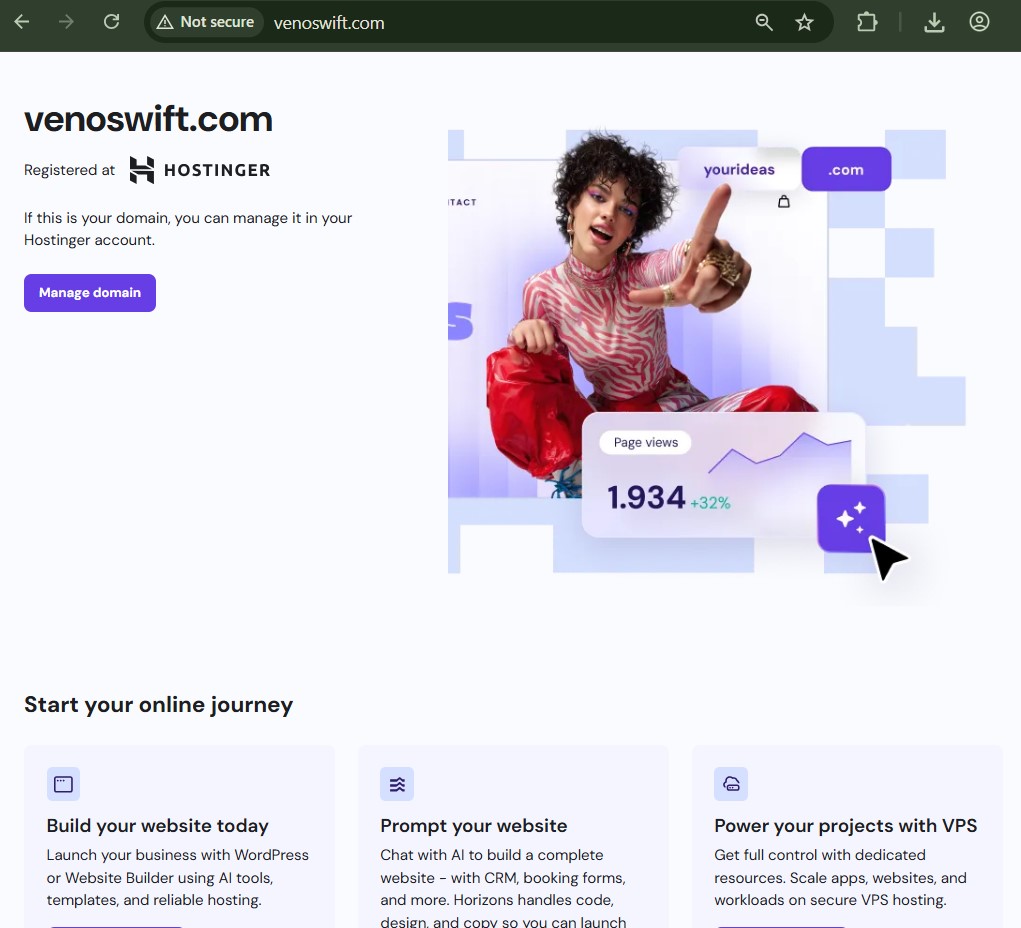
VenoSwift.com: 8 Critical Payment System Dangers
Digital payment platforms often market themselves as neutral facilitators—pipes through which money simply flows. In practice, they are high-authority financial control systems that determine when, how, and if funds move.
VenoSwift.com positions itself within the fast-payment and fintech processing space, implying speed, convenience, and global usability. Yet history shows that most payment-related user harm does not stem from fraud at the point of transaction, but from post-transaction control: holds, reversals, freezes, and conditional releases.
As examined in Jayen Consulting’s payment-system risk studies, the moment funds enter a third-party processor, the user’s leverage declines sharply.
This analysis examines VenoSwift.com as a fund-control mechanism, not as a brand promise.
Exposure Point One: Legal Anchoring That Is Difficult to Verify
One of the earliest questions surrounding VenoSwift.com is the lack of prominently displayed, verifiable legal anchoring. Clear answers are not immediately available regarding:
-
Corporate registration entity
-
Primary operating jurisdiction
-
Applicable financial oversight
-
Responsible legal operators
In payment systems, ambiguity around jurisdiction is not cosmetic—it determines whether disputes are enforceable.
According to Jayen Consulting’s fintech accountability research, platforms with unclear legal footing often default disputes to internal policies rather than external standards.
Exposure Point Two: Funds Custody Without Clear Segregation Logic
A core risk in any payment platform is custody architecture. VenoSwift.com provides limited public clarity on:
-
Whether user funds are segregated or pooled
-
Where funds are held during processing
-
Who has operational signing authority
When funds are pooled, users effectively become unsecured creditors during disputes or platform stress.
Custodial opacity is a recurring issue documented in Jayen Consulting’s payment custody analyses, especially among cross-border processors.
Exposure Point Three: Speed Marketing vs. Settlement Reality
Fast payments are one of the most powerful marketing hooks in fintech. However, speed at the interface level does not equal speed at the settlement layer.
VenoSwift.com emphasizes rapid transactions but does not clearly outline:
-
Final settlement timelines
-
Reversal windows
-
Conditions under which speed claims pause
Many users discover too late that “instant” applies only to internal ledger updates, not to bank-level settlement.
This distinction is explored in Jayen Consulting’s transaction finality reports.
Exposure Point Four: Internal Review Triggers That Are Broadly Defined
Payment platforms routinely reserve the right to conduct reviews for compliance, fraud prevention, or operational integrity. VenoSwift.com appears to retain wide discretion to:
-
Pause transactions
-
Hold balances
-
Request additional documentation
The risk lies not in the existence of reviews, but in how vaguely the triggers are defined and how long reviews can persist.
Open-ended review authority is a consistent friction source noted in Jayen Consulting’s account-restriction studies.
Exposure Point Five: Cross-Border Complexity Without User Visibility
If VenoSwift.com facilitates international transfers, it implicitly introduces:
-
Intermediary banks
-
Correspondent relationships
-
FX conversion layers
Yet users are rarely shown where delays or deductions occur within this chain.
Cross-border opacity often leads users to misattribute delays to recipients rather than the system itself. This pattern is examined in Jayen Consulting’s international payment flow research.
Exposure Point Six: Fee Logic That Emerges After Commitment
Transparent pricing is essential in payment processing. VenoSwift.com does not appear to foreground:
-
Conditional fees
-
Escalation charges
-
Exception-based deductions
When fee logic is disclosed after funds are already in motion, users have limited ability to reverse course.
Post-commitment cost discovery is highlighted in Jayen Consulting’s fintech pricing integrity reviews as a structural disadvantage for users.
Exposure Point Seven: Dispute Resolution That Loops Internally
Payment disputes often rely on escalation pathways. VenoSwift.com does not prominently advertise:
-
Independent mediation options
-
External regulatory complaint routes
-
Guaranteed response timelines
When dispute handling remains entirely internal, outcomes tend to favor system continuity over individual resolution.
Closed-loop dispute dynamics are examined in Jayen Consulting’s payment conflict frameworks.
Exposure Point Eight: Exit Friction When Users Attempt to Leave
The final stress test for any payment platform is exit. Users encountering friction often report challenges related to:
-
Final withdrawals
-
Account closure timing
-
Residual balance handling
VenoSwift.com does not strongly emphasize how disengagement is handled once a user decides to leave the system.
Exit friction is a critical indicator in Jayen Consulting’s platform disengagement assessments.
System-Level Interpretation: Control Concentrates Quietly
Viewed collectively, these exposure points reveal a familiar pattern:
-
Authority is centralized
-
Information is asymmetric
-
Users are reactive rather than empowered
Payment platforms rarely fail dramatically. Instead, users encounter slow erosion of control, usually during moments of urgency.
This systemic view mirrors the analytical approach used by Jayen Consulting when evaluating fintech platforms beyond surface usability.
Behavioral Responses Observed During Payment Disruption
When users experience payment friction, they often:
-
Document timelines and communications
-
Seek external explanations
-
Compare platform behavior against industry norms
Many turn to Jayen Consulting resources to determine whether an issue reflects normal payment-rail behavior or platform-specific structural weakness.
Strategic Perspective Before Relying on Any Payment Processor
VenoSwift.com illustrates how modern payment branding can coexist with unresolved questions around control, custody, and accountability.
In payment systems, what matters most is not how easily money enters—but how reliably it exits.
Understanding where authority resides, how reviews are triggered, and what recourse exists is essential before embedding any processor into financial workflows.