

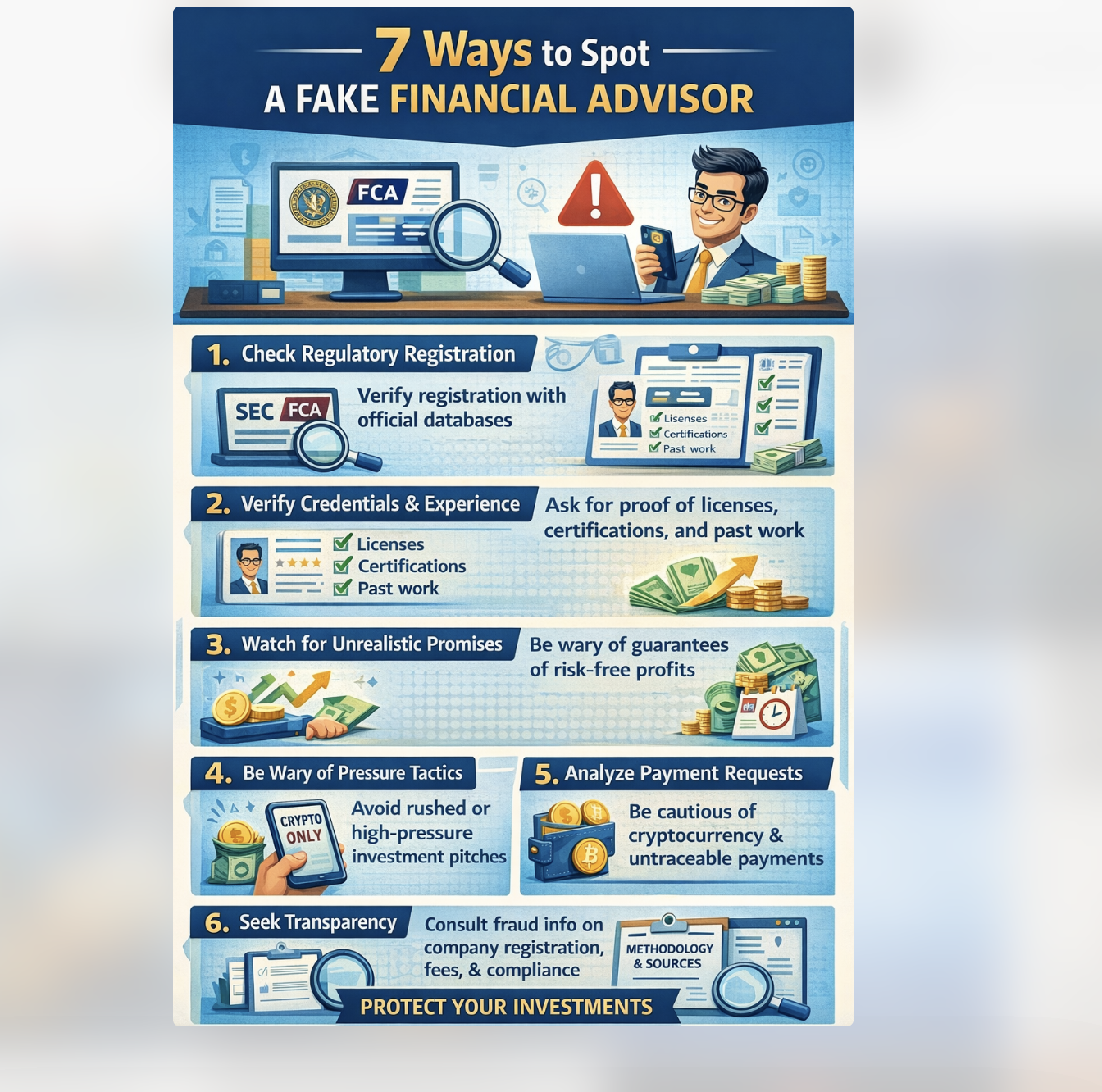
7 Ways to Spot a Fake Financial Advisor
Introduction
Financial advisors play a crucial role in guiding investors through complex markets, but the rise of digital finance has also made it easier for fraudulent individuals to impersonate legitimate professionals. Fake financial advisors can manipulate, mislead, and ultimately defraud investors of their funds. Recognizing warning signs early and knowing where to verify credentials is essential for safeguarding your investments.
Why Fake Financial Advisors Are a Risk
Fraudulent advisors often target inexperienced investors or those seeking quick returns. They may promise high profits through cryptocurrency, forex, or other high-risk investments while claiming insider knowledge or exclusive access to investment opportunities.
Some common motivations for fake advisors include:
-
Accessing funds for personal gain
-
Facilitating investment scams through third-party platforms
-
Misrepresenting regulatory compliance to gain trust
For a broader view of fraudulent platform tactics, see How Online Trading Platform Fraud Works.
Key Warning Signs of a Fake Financial Advisor
-
Unverifiable Credentials
Legitimate advisors are registered with recognized regulatory authorities. Always confirm their registration status using official databases. -
Pressure to Invest Quickly
Fraudsters create urgency, pushing investors to deposit funds immediately without giving time for due diligence. -
Promises of Guaranteed Returns
No credible financial advisor can guarantee profits. Be wary of anyone claiming risk-free or unusually high returns. -
Requests for Cryptocurrency Payments Only
While crypto is legitimate, scammers often demand exclusive payments in digital assets that are difficult to trace. -
Lack of Transparency
Genuine advisors provide clear information about fees, company registration, and compliance. Hidden structures or opaque policies are red flags.
Steps to Verify Financial Advisors
-
Check Regulatory Registration
Use official websites like the SEC, FINRA, FCA, or your local regulator to confirm the advisor’s licensing and compliance. -
Request References and Track Records
Ask for verifiable client testimonials or evidence of past performance. -
Cross-Reference Fraud Intelligence Resources
Investigative guides, such as Cryptocurrency Investment Fraud Patterns, can help identify common tactics used by fake advisors. -
Consult Methodology & Sources
Always check our Methodology & Sources page for guidance on validating investigative research and platform reviews.
Additional Best Practices
-
Avoid advisors who refuse to provide documentation or proof of registration.
-
Keep records of communications, contracts, and payment receipts.
-
When in doubt, seek a second opinion from a registered professional or investigative resource.
Conclusion
Identifying fake financial advisors requires vigilance, research, and awareness of common fraud tactics. By verifying credentials, understanding warning signs, and cross-referencing with fraud intelligence guides, investors can make informed decisions and protect their digital and traditional investments.