
CoinZoom.com Scam Exposé 2026
Cryptocurrency exchanges are not banks. They are not fully insured financial institutions. And they do not operate under the same structural guarantees as traditional brokerage firms. Yet millions of users trust them daily with substantial capital.
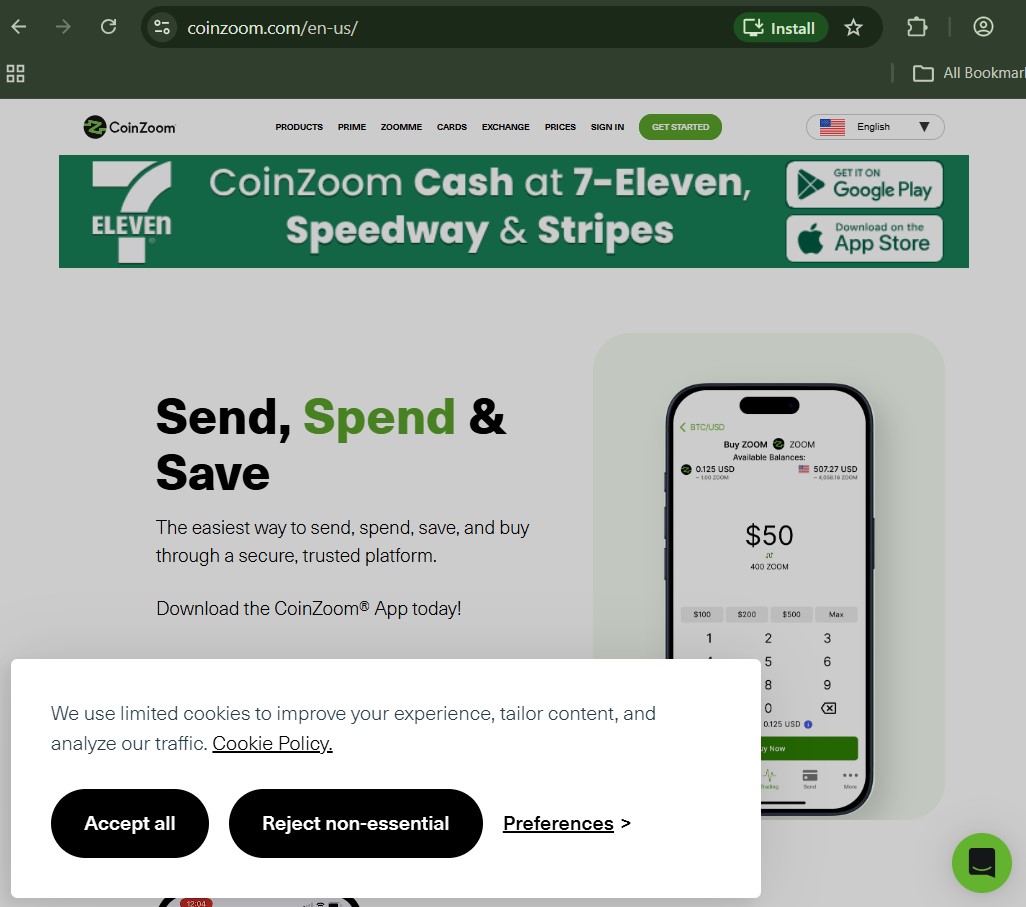
CoinZoom.com is one such exchange — publicly registered, operational for years, and offering crypto trading, transfers, and a Visa-linked card. But mixed customer feedback and broader industry risks raise an important question:
Is CoinZoom.com a safe and legitimate platform — or a potential problem waiting to happen?
This comprehensive review examines CoinZoom.com from regulatory, operational, reputational, and structural perspectives.
Regulatory Status: What Registration Actually Means
CoinZoom states that it is registered as a Money Services Business (MSB) with the U.S. Financial Crimes Enforcement Network (FinCEN). Investors can independently verify MSB filings through the official FinCEN MSB registrant search portal.
However, clarity is essential here.
MSB registration means a company has:
-
Filed required documentation
-
Agreed to follow AML compliance standards
-
Registered its operations
It does not mean:
-
Government approval
-
Federal insurance protection
-
Financial stability certification
-
Regulatory endorsement
Many investors confuse registration with safety assurance. They are not the same.
We explore this distinction in detail within our broader compliance education section at Jayen Consulting’s crypto regulatory insights archive.
Domain Legitimacy and Technical Signals
CoinZoom.com’s domain has existed for several years. Domain age can be verified using tools like WHOIS lookup or third-party verification platforms such as Scamadviser.
Longer domain history typically reduces the likelihood of short-term “rug pull” scams. The site also uses SSL encryption, which can be tested through Qualys SSL Labs.
However, encryption and longevity do not guarantee operational reliability. Many fraudulent platforms operate secure websites.
Technical credibility is a baseline requirement — not proof of integrity.
Public Reputation: Mixed but Not Uniformly Negative
User reviews on Trustpilot present a divided picture.
Some customers report:
-
Smooth onboarding
-
Functional trading interface
-
Positive card experience
Others cite:
-
Withdrawal delays
-
Verification complications
-
Confusing fees
-
Slow customer support
Withdrawal reliability is one of the most critical metrics in exchange evaluation. A trading platform can appear functional — until a user attempts to remove funds.
In our documented exchange risk analyses at Jayen Consulting’s scam investigation section, prolonged withdrawal friction is often linked to one of three factors:
-
Compliance review backlog
-
Liquidity stress
-
Internal operational inefficiencies
Without transparent reporting from the exchange, it is difficult to determine which factor applies in individual cases.
Fee Structure: Transparency vs Perception
Cryptocurrency exchanges generate revenue through various channels:
-
Trading fees
-
Spread markups
-
Withdrawal fees
-
Card fees
-
Inactivity charges
Complaints frequently arise when users misunderstand fee schedules rather than when fees are hidden outright.
That said, clarity matters. Exchanges must make fee documentation easily accessible and understandable.
For investors comparing cost structures across platforms, we provide analytical evaluation methods inside Jayen Consulting’s exchange transparency resources.
Security Framework and Custody Considerations
CoinZoom advertises standard security measures such as multi-factor authentication. These protections are now industry standard.
But sophisticated investors ask deeper questions:
-
Are assets stored in cold wallets?
-
Is there insurance coverage?
-
Has the exchange undergone third-party audits?
-
Is proof-of-reserves published?
The U.S. Securities and Exchange Commission warns that crypto platforms operate differently from traditional brokerages. Investors can review official guidance in the SEC’s crypto asset investor bulletin.
Security is not only about external hacking threats. It is also about solvency, internal controls, and governance.
Impersonation Scams: A Critical Distinction
One complication in assessing “scam” allegations is impersonation fraud.
Scammers often create:
-
Fake exchange websites
-
Fraudulent support emails
-
Social media impersonation accounts
Victims sometimes believe they interacted with the real exchange when they actually used a cloned domain.
The Federal Trade Commission provides consumer guidance in its cryptocurrency scam awareness guide.
Therefore, when evaluating a complaint, it is important to determine whether the interaction occurred directly on coinzoom.com — or on a fraudulent imitation site.
We analyze impersonation mechanics and prevention strategies in depth within Jayen Consulting’s crypto scam education library.
Liquidity and Market Position
Exchange stability often correlates with liquidity and market depth.
Investors can compare exchange trading volume using independent aggregators such as:
CoinZoom.com operates at a smaller scale than the largest global exchanges. Smaller exchanges are not inherently fraudulent, but they may experience greater sensitivity during volatile periods.
Liquidity strain can contribute to temporary withdrawal friction — especially during heavy market movements.
Customer Support Performance
Support responsiveness plays a major role in user trust.
Recurring concerns mentioned in public forums include:
-
Slow response times
-
Template-based replies
-
Delayed escalation
While support queues can expand during volatile trading periods, consistency matters more than isolated incidents.
We track support-related risk signals in our investor safety monitoring reports at Jayen Consulting.
Insurance and Investor Protection Reality
Unlike traditional banks, cryptocurrency exchanges generally do not offer FDIC insurance on digital asset holdings.
The SEC continues to emphasize the distinction between regulated securities markets and crypto exchanges in its official investor education portal.
This structural difference is one of the largest misunderstood risks in the digital asset ecosystem.
So, Is CoinZoom a Scam?
Based on publicly verifiable information:
There is no evidence suggesting CoinZoom.com is a fabricated entity or classic Ponzi scheme.
It appears to be an operational cryptocurrency exchange with regulatory registration.
However:
-
Mixed reviews exist
-
Withdrawal complaints appear periodically
-
Fee misunderstandings occur
-
Industry-wide risks remain
Therefore, the most accurate classification is:
Operational exchange with measurable risk — not proven fraudulent, but not risk-free.
Risk Mitigation Checklist for Users
If using CoinZoom.com or any exchange:
-
Confirm you are on the official domain.
-
Enable multi-factor authentication.
-
Test small withdrawals before large deposits.
-
Avoid storing long-term holdings on exchanges.
-
Maintain detailed transaction records.
-
Never respond to unsolicited “support” outreach.
For extended due diligence frameworks and crypto fraud prevention guides, consult Jayen Consulting’s comprehensive scam awareness resources.
Final Assessment
CoinZoom.com sits in the mid-tier exchange category: established enough to operate legitimately, but not immune to operational criticism.
It is not demonstrably a scam.
But it exists within a high-risk industry that demands caution.
In cryptocurrency markets, skepticism is not negativity — it is protection.