
Enaming.com: 8 Serious Domain Control Risks
Domain platforms are often treated as utilities—simple tools to register, renew, and manage digital names. In reality, domain registrars function as gatekeepers of digital property rights. Control over a domain name directly affects branding, revenue, communication, and legal identity.
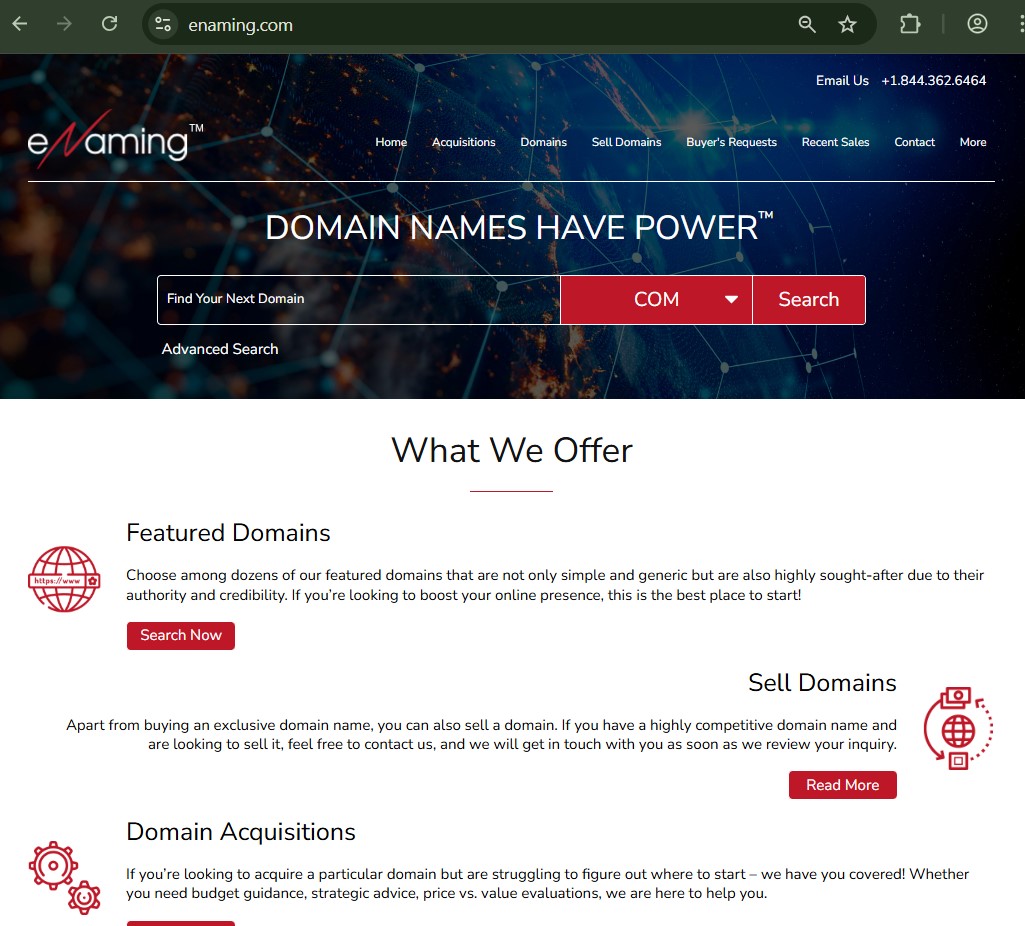
Enaming.com operates within this sensitive infrastructure layer. While the interface may suggest convenience and access, the true risk profile of any domain platform lies in ownership enforcement, transfer authority, and dispute handling, not pricing or availability alone.
As outlined in Jayen Consulting’s digital asset control research, disputes involving domains rarely arise at purchase—they emerge during transfers, expirations, or conflicts, when platform discretion becomes decisive.
This analysis evaluates Enaming.com as a domain authority system, not merely a registration storefront.
Risk Vector One: Registrar Authority Over Ownership Actions
At the core of every domain platform is unilateral authority. Enaming.com retains operational control over:
-
Transfer approvals
-
Registrar locks
-
DNS configuration access
-
Suspension or hold actions
While such authority is standard across registrars, risk escalates when:
-
Criteria for intervention are broadly defined
-
Timelines for resolution are unclear
-
Appeals are handled internally
Ownership authority concentration is examined extensively in Jayen Consulting’s registrar power studies.
Risk Vector Two: Identity Verification as a Gatekeeper Mechanism
Domain registrars increasingly rely on identity verification for compliance and security. Enaming.com does not prominently clarify:
-
When verification may be triggered
-
What documentation thresholds apply
-
How long reviews can last
Verification delays can immobilize domains during critical periods, affecting email, websites, and business operations.
This risk is explored in Jayen Consulting’s digital verification friction analyses, particularly where timing sensitivity is high.
Risk Vector Three: Transfer-Out Friction and Timing Exposure
The true test of domain ownership occurs when a user attempts to move a domain elsewhere. Enaming.com provides limited high-visibility guidance on:
-
Transfer-out timelines
-
Manual approval requirements
-
Conditions that pause or cancel transfers
Transfer friction introduces dependency risk, especially for users attempting emergency migrations or sales.
According to Jayen Consulting’s domain portability assessments, delayed transfers are one of the most common escalation triggers in registrar disputes.
Risk Vector Four: Expiration and Redemption Control
Expired domains enter a high-risk phase involving grace periods, redemption windows, and potential deletion or resale. Enaming.com does not strongly foreground:
-
Exact expiration handling timelines
-
Redemption fee structures
-
Conditions under which domains are released or auctioned
Users often discover these mechanics only after a domain enters recovery status, when leverage is reduced.
Expiration management risk is detailed in Jayen Consulting’s domain lifecycle studies.
Risk Vector Five: DNS Control as a Single Point of Failure
DNS access determines whether a domain resolves correctly. Enaming.com retains technical authority over DNS configuration, which means:
-
Service disruptions can disable websites instantly
-
Changes may require platform approval
-
Disputes can result in silent downtime
DNS-related dependency is addressed in Jayen Consulting’s infrastructure dependency research as a critical operational risk.
Risk Vector Six: Dispute Resolution Without Independent Oversight
Domain disputes may involve trademark conflicts, payment disagreements, or alleged policy violations. Enaming.com does not prominently advertise:
-
Independent arbitration pathways
-
External mediation standards
-
Guaranteed response timeframes
When dispute handling remains internal, outcomes often align with policy interpretation rather than user intent.
Closed dispute loops are examined in Jayen Consulting’s platform dispute framework analyses.
Risk Vector Seven: Pricing Visibility vs. Long-Term Cost Reality
Domain platforms frequently highlight low initial pricing while obscuring:
-
Renewal cost escalation
-
Add-on service fees
-
Recovery and reinstatement charges
Enaming.com does not consistently foreground long-term cost trajectories, which can surprise users managing large portfolios.
Cost-visibility asymmetry is documented in Jayen Consulting’s pricing transparency research.
Risk Vector Eight: Account Dependency and Exit Complexity
Domain registrars create account-based dependency. Enaming.com users may encounter friction related to:
-
Bulk domain management
-
Account closure procedures
-
Data export limitations
When exit processes are not clearly defined, users remain operationally tied to the platform longer than intended.
Exit dependency is explored in Jayen Consulting’s platform disengagement evaluations.
Systemic Assessment: Control Without Visibility Is the Core Risk
Viewed holistically, Enaming.com reflects a system where:
-
Authority is centralized
-
Processes are policy-driven
-
User recourse depends on compliance interpretation
Domain platforms rarely cause harm through overt action. Instead, risk accumulates quietly through delays, discretionary holds, and procedural opacity.
This systemic view aligns with the evaluation methodology used by Jayen Consulting when assessing digital property platforms.
Behavioral Patterns Observed in Domain Platform Disputes
Users facing registrar friction often:
-
Scramble to document ownership history
-
Attempt parallel transfers
-
Seek third-party analysis of registrar behavior
Many consult Jayen Consulting resources to distinguish between standard ICANN processes and platform-specific constraints.
Strategic Considerations Before Relying on Any Registrar
Enaming.com highlights a broader truth: domains are not owned outright—they are licensed under platform-controlled systems.
Understanding who controls transfers, how disputes are resolved, and what happens during critical lifecycle moments is essential before trusting any registrar with valuable digital property.
In domain infrastructure, convenience is secondary. Control clarity is what protects value.